
Nonprofits Can Expand Their Reach By Being More Relevant
Updated On: 03/19/2025
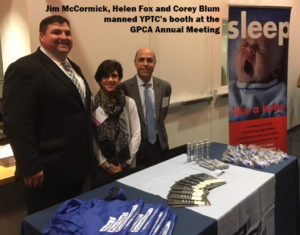
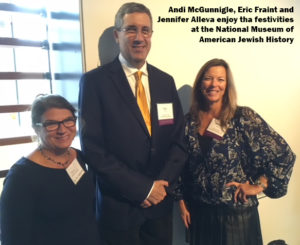
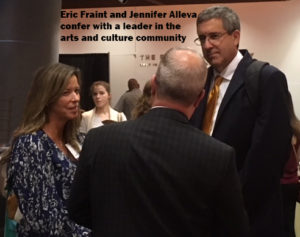
For 10 years, Your Part-Time Controller has proudly supported the annual meetings of the Greater Philadelphia Cultural Alliance, a networking and advocacy consortium of hundreds and arts and cultural institutio ns in the City of Brotherly Love and its metro region. The 2018 GPCA event got off with a rousing fanfare of drumrolls as performers from the West Powelton Drummers greeted more than 600 attendees who gathered in the National Museum of American Jewish History to review the year’s progress, make new friends and reacquaint with old ones, and discuss this year’s theme of “The Art of Relevance.”
Citing George Washington, who said, “The Government of the United States gives to bigotry no sanction, to persecution no assistance,” GPCA officials noted the relevance in today’s era of calling for religious pluralism and recognizing the contributions of immigrants. That message translates into a focus on inclusivity and diversity among arts and culture organizations who increasingly are taking their programs out into the community, engaging the public where they are and responding to what they want.
 Where “culture” in the 19th and 20th Centuries was an example of “top-down” philanthropy by a wealthy elite, today’s more diverse and technologically-connected communities make the arts more accessible and participatory and more “bottom-up,” said GPCA President Maud Lyon. “Diversity, equity and inclusion are the fundamental issues of our time,” she said. Culture now helps us define our sense of place and serves as a way for us to learn something or someone new.
Culture in the 21st Century can mean food trucks or street art, she said. The arts enable people to make social change, to co-create meaning in their lives, to connect with each other, to increase social impact, and to build social capital. “It’s not about the arts organizations, it’s about who we serve.”
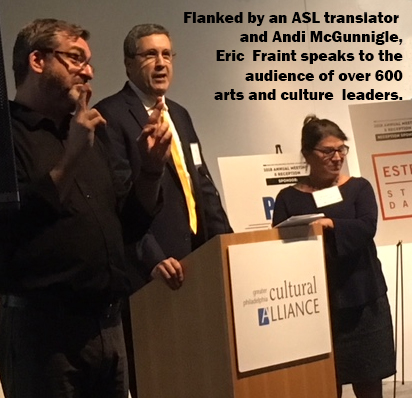
 This theme was echoed by YPTC President & Founder Eric Fraint, who was greeted with another rousing drumroll. After reading brief highlights from 42 testimonials from some of YPTC’s clients he told the audience that he wasn’t there to glorify the company. “It’s not about Your Part-Time Controller, it’s about our clients. What we do is our passion and our mission to work with nonprofits.”
The theme was carried further by keynote speaker Nina Simon, the visionary Executive Director of the Santa Cruz, Calif., Museum of Art & History, who described how she dramatically boosted the finances and public presence of a struggling institution by making art and history more authentic and relevant to various communities. In her book, The Art of Relevance, she explores how mission-driven organizations can matter more to more people by having creative collaborations that are more participatory.
 By using the arts to “open doors” and build a stronger and more connected community rather than just showcasing objects behind “closed doors,” her museum created innovative projects in off-site venues to attract new audiences ranging from angry divorcees to foster children aging out of the system. Such programs were designed of, by, and for these communities, with full participation, design and curation by members of those constituencies.
“There is no universal relevance,” she said. Each of us declares each day what’s relevant to us based on two criteria: how much meaning will I get out of it, and how much effort will it take? Calling “relevance a key that unlocks meaning for a deeper experience,” Simon called on the audience to be more outgoing and to not only bring their art out in the community but to also engage those communities in designing art that is relevant to them.
“Culture belongs to everyone, and everyone belongs to culture,” she said.